
Recallab › Question bank › Social & Preventive Medicine › Nutrition & Health › #50242
Lathyrism
After three successive crop failures, several men in a village develop progressive spastic weakness of both legs with brisk knee jerks, extensor plantars and a scissoring gait. Sensation, bladder function and the upper limbs are normal. They have been eating one pulse almost exclusively. Which toxin is responsible?
- correctA. Beta-oxalyl-amino-alanine from Lathyrus sativus
- B. Ergotamine from Claviceps purpurea
- C. Sanguinarine from Argemone mexicana
- D. Aflatoxin from Aspergillus flavus
Explanation
Key fact
Neurolathyrism is a pure motor spastic paraparesis from khesari dal eaten as a famine food. Sensation and bladder are spared.
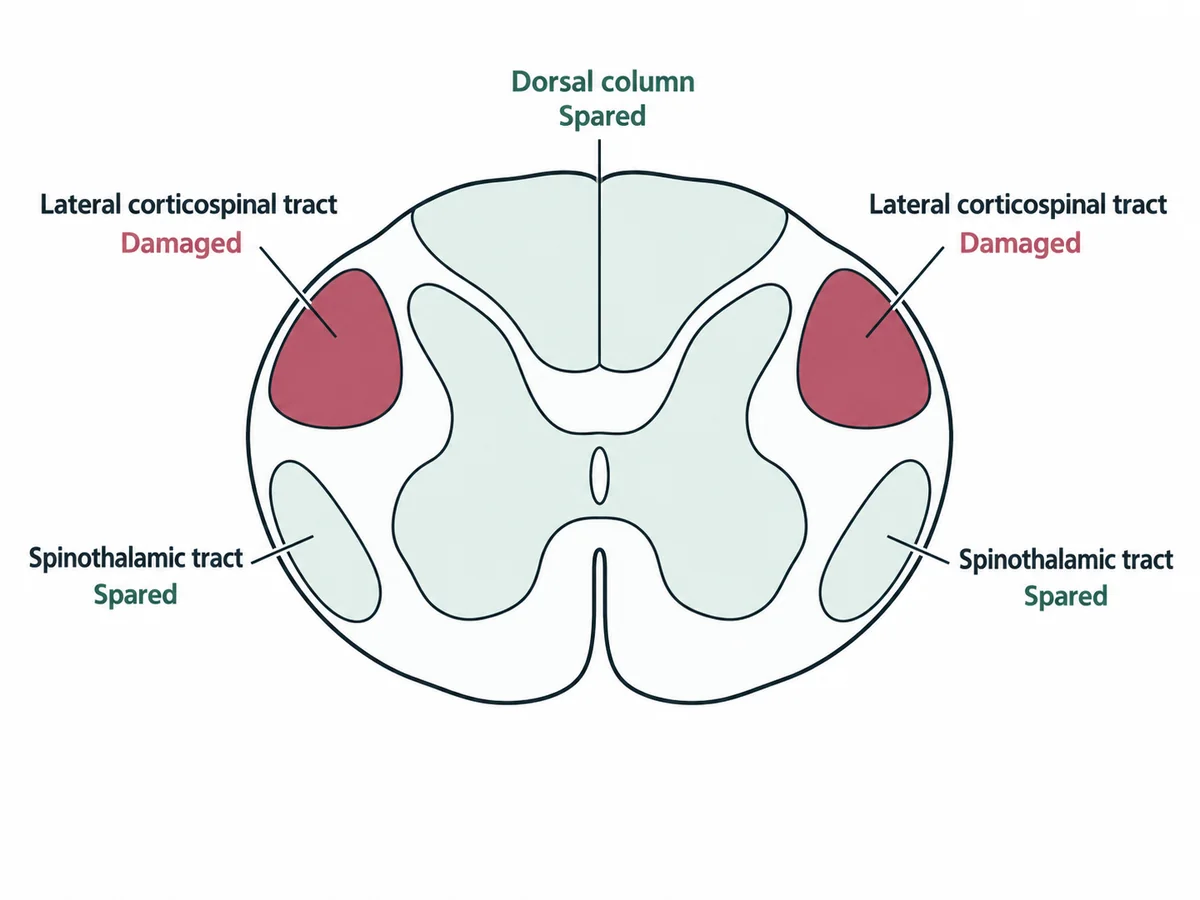
Beta-oxalyl-amino-alanine from Lathyrus sativus. It is an excitotoxic amino acid that damages the corticospinal tracts selectively.
Why
*Lathyrus sativus* - khesari dal - is drought-resistant, so it is eaten when other crops fail.
It contains the neurotoxin BOAA, an excitatory amino acid analogue.
It acts on glutamate receptors and injures the upper motor neurone pathways.
The result is a symmetrical spastic paraparesis with brisk reflexes.
Sensory pathways and sphincters are spared, which is what makes it recognisable.
Young men doing heavy physical work are affected most.
Which tracts are hit, and which are spared
Why not the others
- B. Ergotamine from Claviceps purpurea — causes ergotism - gangrene of the extremities and convulsions - from contaminated rye or bajra.
- C. Sanguinarine from Argemone mexicana — causes epidemic dropsy when argemone oil adulterates mustard oil: oedema, erythema, glaucoma and cardiac failure, not a spastic paraparesis.
- D. Aflatoxin from Aspergillus flavus — contaminates groundnut and maize and causes acute hepatitis and hepatocellular carcinoma.
Remember
Motor only, legs only, famine food. Three features and the diagnosis is made at the bedside.
Go deeper
Prevention is by steeping: soaking the pulse in hot water and discarding the water removes most of the toxin. Parboiling works too.
Genetic work on low-toxin varieties, and vitamin C supplementation, have both been tried; the neurological damage itself is irreversible.
The other classic food toxicants to know: argemone in epidemic dropsy, aflatoxin, fluorosis from drinking water, and endemic ascites from pyrrolizidine alkaloids.
Park K. Park's Textbook of Preventive and Social Medicine, 28th ed. (Bhanot, 2025).