
Recallab › Question bank › Biochemistry › Nutrition › #50311
Phrynoderma
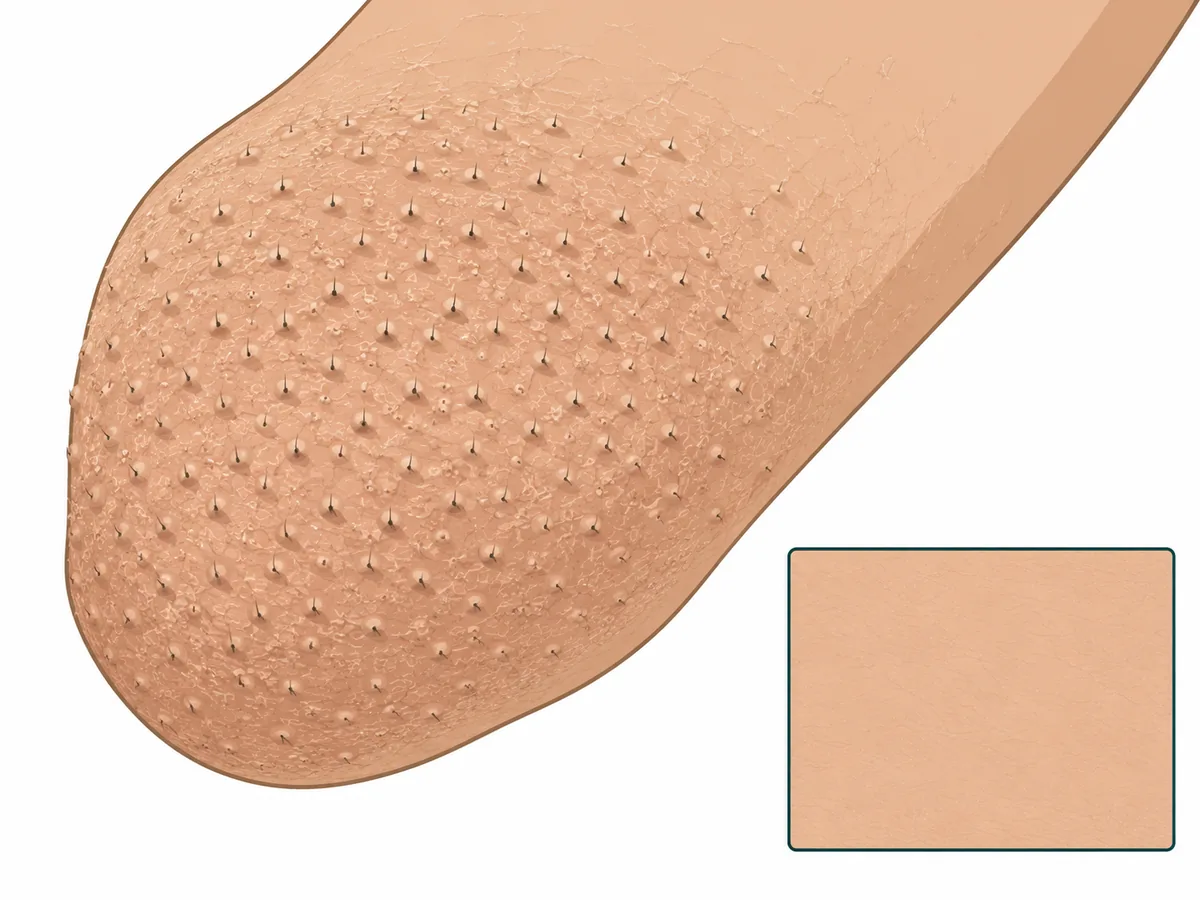
A 9-year-old boy from a low-income household has rough, dry skin with horny follicular papules over the extensor surfaces of both elbows and knees, giving a toad-skin feel. He also complains of difficulty seeing after dusk. Which deficiency is this?
- A. Vitamin B12
- correctB. Vitamin A
- C. Niacin
- D. Vitamin C
Explanation
Key fact
Phrynoderma is follicular hyperkeratosis of vitamin A deficiency. Skin and night vision fail together because both depend on retinol.
Vitamin A. Toad skin over the extensor surfaces plus night blindness is the classical pairing.
Why
Retinol maintains the differentiation of epithelium everywhere in the body.
Without it, keratin plugs the hair follicles and the skin feels like sandpaper.
The same retinol forms rhodopsin, so rod function fails and night vision goes.
Night blindness is the earliest ocular sign and reverses fastest on treatment.
Conjunctival xerosis and Bitot's spots follow if the deficiency continues.
Phrynoderma: follicular hyperkeratosis over the extensor surfaces
Why not the others
- A. Vitamin B12 — deficiency causes megaloblastic anaemia and posterior column signs. It affects neither the skin follicles nor night vision.
- C. Niacin — deficiency causes pellagra - a photosensitive dermatitis on sun-exposed skin, with diarrhoea and dementia. The rash spares covered areas.
- D. Vitamin C — deficiency gives perifollicular haemorrhage with corkscrew hairs and swollen bleeding gums, not dry horny plugs.
Remember
Toad skin and night blindness travel together. Both are retinol.
Go deeper
Vitamin A deficiency is still the leading preventable cause of childhood blindness worldwide, which is why prophylaxis is a national programme rather than a prescription.
The eye changes are graded: night blindness, conjunctival xerosis, Bitot's spot, corneal xerosis, then keratomalacia, which destroys the eye within days.
Phrynoderma is not entirely specific - deficiencies of essential fatty acids and of several B vitamins can produce a similar follicular rash in a malnourished child.
Harper's Illustrated Biochemistry, 33rd ed. (McGraw Hill, 2025); Park K. Park's Textbook of Preventive and Social Medicine, 28th ed. (Bhanot, 2025).