
Recallab › Question bank › Obstetrics › Hypertensive Disorders in Pregnancy › #50586
HELLP syndrome
A woman at 34 weeks with pre-eclampsia develops right upper quadrant pain and nausea. Platelets are 68,000, lactate dehydrogenase is 900 and transaminases are three times normal. A blood film shows fragmented red cells. What is the diagnosis, and what is the definitive treatment?
- A. Immune thrombocytopenic purpura; intravenous immunoglobulin and continue the pregnancy
- B. Acute fatty liver of pregnancy; expectant management to 37 weeks
- correctC. HELLP syndrome; delivery, after stabilisation and magnesium sulfate
- D. Viral hepatitis; supportive care and delivery at term
Explanation
Key fact
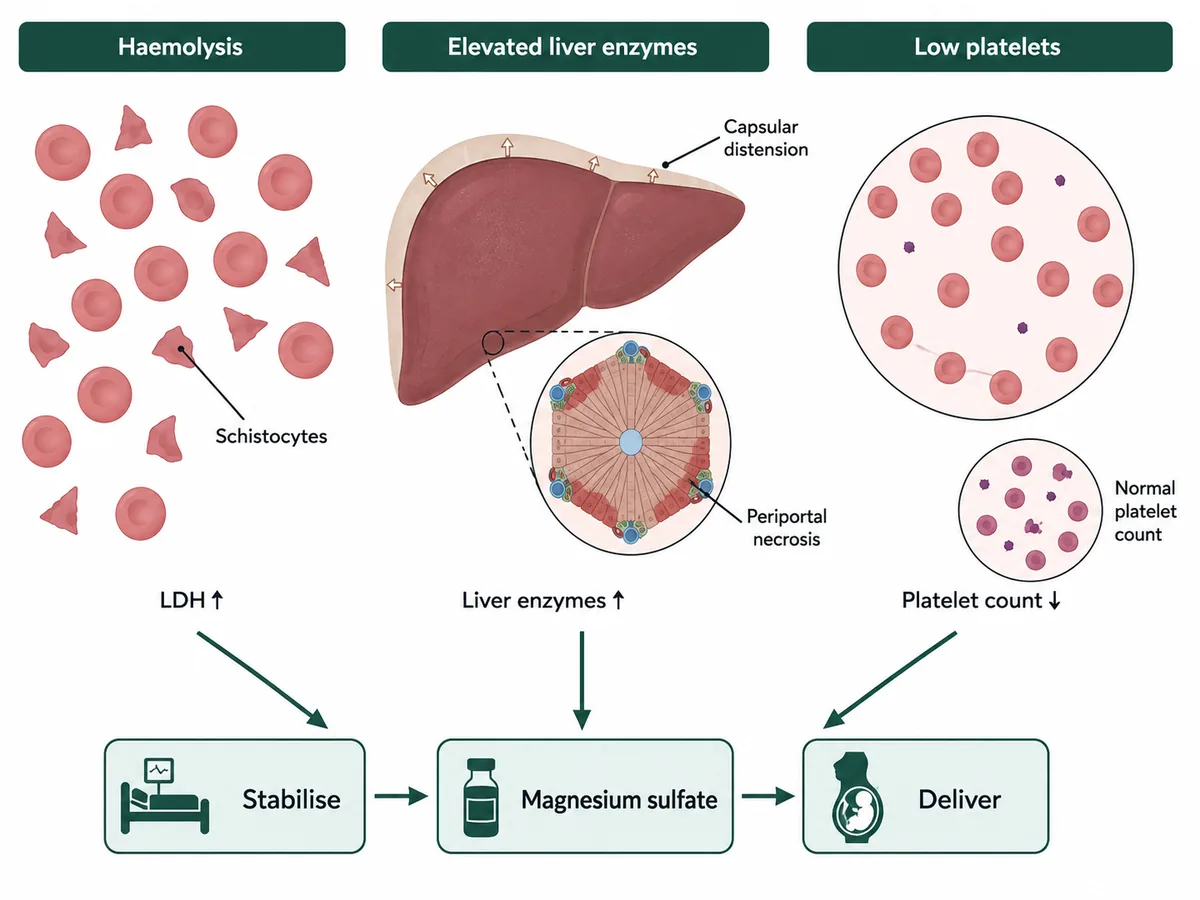
Haemolysis, elevated liver enzymes and low platelets in pre-eclampsia is HELLP. Delivery is the only definitive treatment.
HELLP syndrome, treated by delivery after stabilisation with magnesium sulfate. It is a variant of severe pre-eclampsia.
Why
Fragmented red cells and a raised lactate dehydrogenase indicate haemolysis.
Raised transaminases reflect periportal hepatic necrosis.
Platelets below 100,000 complete the triad.
Right upper quadrant pain comes from distension of the liver capsule.
Magnesium sulfate prevents eclampsia; only delivery ends the disease.
The three components of HELLP
Why not the others
- A. Immune thrombocytopenic purpura; intravenous immunoglobulin and continue the pregnancy — would not cause haemolysis, liver derangement or right upper quadrant pain.
- B. Acute fatty liver of pregnancy; expectant management to 37 weeks — is the main differential but typically shows hypoglycaemia, coagulopathy and a raised ammonia - and it also requires delivery, not waiting.
- D. Viral hepatitis; supportive care and delivery at term — would give far higher transaminases without thrombocytopenia or fragmented cells.
Remember
Haemolysis, liver enzymes, low platelets - and the cure is delivery.
Go deeper
Subcapsular hepatic haematoma is the feared complication; sudden shoulder pain or shock demands imaging and is managed without laparotomy where possible.
Corticosteroids improve the platelet count transiently but do not improve maternal or perinatal outcome, so they are given for fetal lung maturity only.
Platelets recover within a few days of delivery, and a count that keeps falling after 72 hours should prompt reconsideration of the diagnosis.
Williams Obstetrics, 26th ed. (McGraw Hill, 2022); DC Dutta's Textbook of Obstetrics, 11th ed. (Jaypee, 2026).