
Recallab › Blog › NEET PG question types: recognise the task before you choose the answer
NEET PG question types: recognise the task before you choose the answer
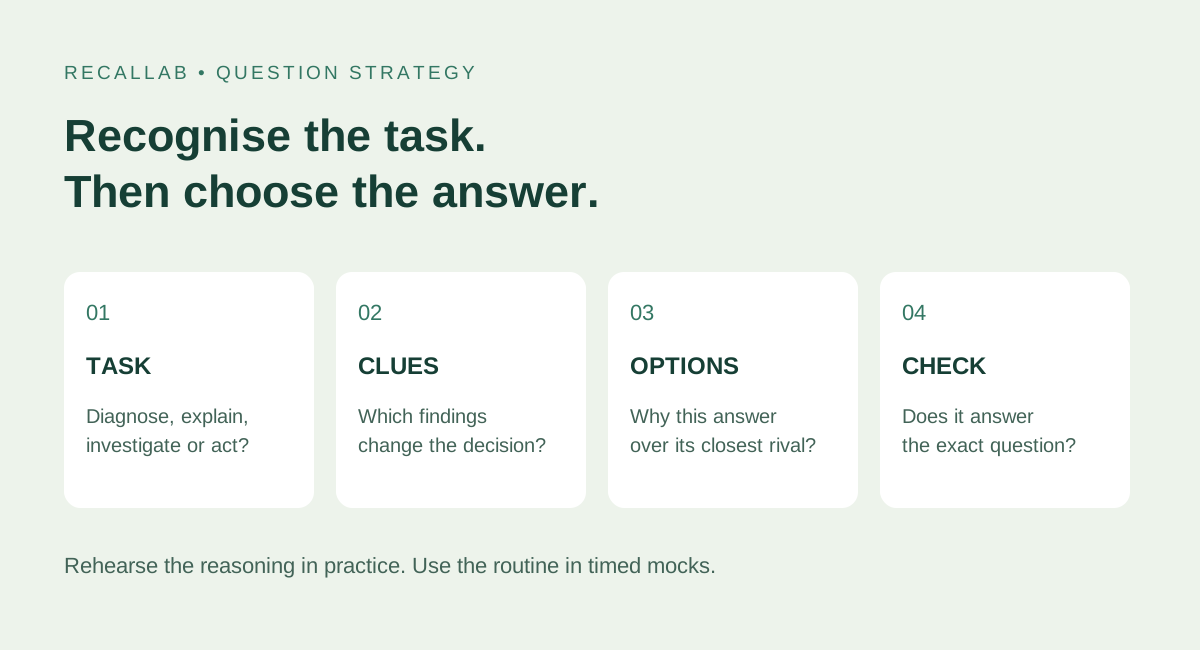
You recognise the disease. You remember the image. Two options look familiar. Yet you are still unsure which answer the examiner wants. Often, the missing step is identifying the precise task: diagnose, explain, investigate, or act next.
Register to practise NEET PG image MCQs →Free account, no card needed.
A useful way to prepare for that moment is to practise a varied set of demands: clinical recognition, management decisions, visual interpretation, mechanisms, factual recall and calculations. Preparing well means practising each of these demands—and learning to switch between them.
 View larger ↗⤢ Tap to enlarge
Below, four real Recallab MentorQs show the routine at work, each with the figure the learner sees. Try each one before opening its answer.
Seven question types to practise
1. The clinical vignette: find the clue that separates the possibilities
A long stem can test a single recognisable presentation. A short stem can require several steps. Length alone is a poor guide to difficulty.
Start by identifying the question at the end, then read the whole case. Summarise the presentation in one sentence: who is affected, what is happening, over what time course, and which finding is most distinctive? Keep relevant negative findings in that summary: an absent feature may help distinguish two plausible answers.
During preparation: after answering, name the strongest alternative and explain which clue makes it less likely. This is more useful than memorising a list of symptoms without learning how to distinguish similar conditions.
In the exam: resist choosing an answer as soon as you recognise the first familiar phrase. Check whether the remaining findings fit.
Recallab example 1 · clinical reasoning
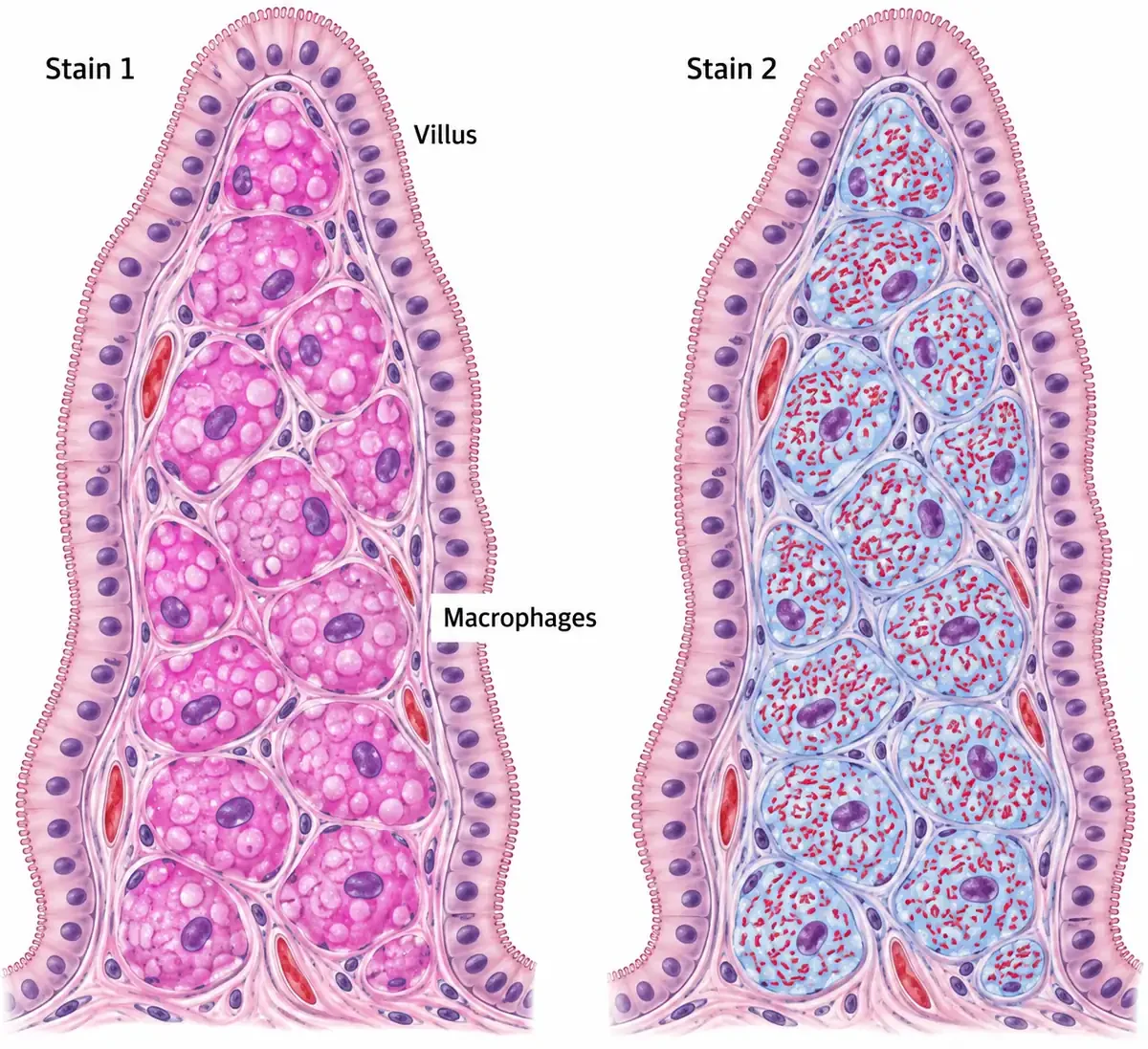
Two stains of the same duodenal villus are drawn in the figure, from a man with CD4 count 30, diarrhoea and fever. Stain 1 shows foamy macrophages strongly stained; stain 2 shows the same macrophages packed with numerous red bacilli. What is the diagnosis?
 View larger ↗⤢ Tap to enlarge
- ADisseminated Mycobacterium avium complex
- BWhipple disease
- CHistoplasmosis
- DCryptosporidiosis
Show the answer and explanation
Answer: A. Disseminated Mycobacterium avium complex
The decisive clue is stain 2. Foamy macrophages that take up stain 1 are seen in both Whipple disease and disseminated Mycobacterium avium complex. Only this infection also packs the macrophages with red bacilli on the second stain, and a CD4 count of 30 is the range in which it disseminates.
Why the closest rival loses: Whipple disease looks the same on stain 1, but its organism, Tropheryma whipplei, does not show as red bacilli on stain 2. Histoplasmosis is a fungus seen on fungal stains, not as bacilli; cryptosporidia sit on the surface of the enterocytes, not inside macrophages.
Recallab question 55320 · Pathology › Infectious disease · reference: Robbins, Cotran & Kumar Pathologic Basis of Disease
2. The next-step question: a correct diagnosis is only the beginning
“What is the diagnosis?”, “Which test confirms it?” and “What should happen next?” are different tasks. Knowing the diagnosis does not automatically answer the other two.
For a management question, attend to the patient’s condition, the setting, what has already been done and the sequence of care. An option may be appropriate eventually without being the best next step in the case described.
During preparation: organise your notes around decisions: what changes the next action, what must happen first, and what can wait? Use current, appropriate clinical references when reviewing management explanations.
In the exam: read qualifiers such as initial, next, definitive and most appropriate carefully. Do not silently replace the question with an easier one you know how to answer.
Recallab example 2 · diagnosis versus next step
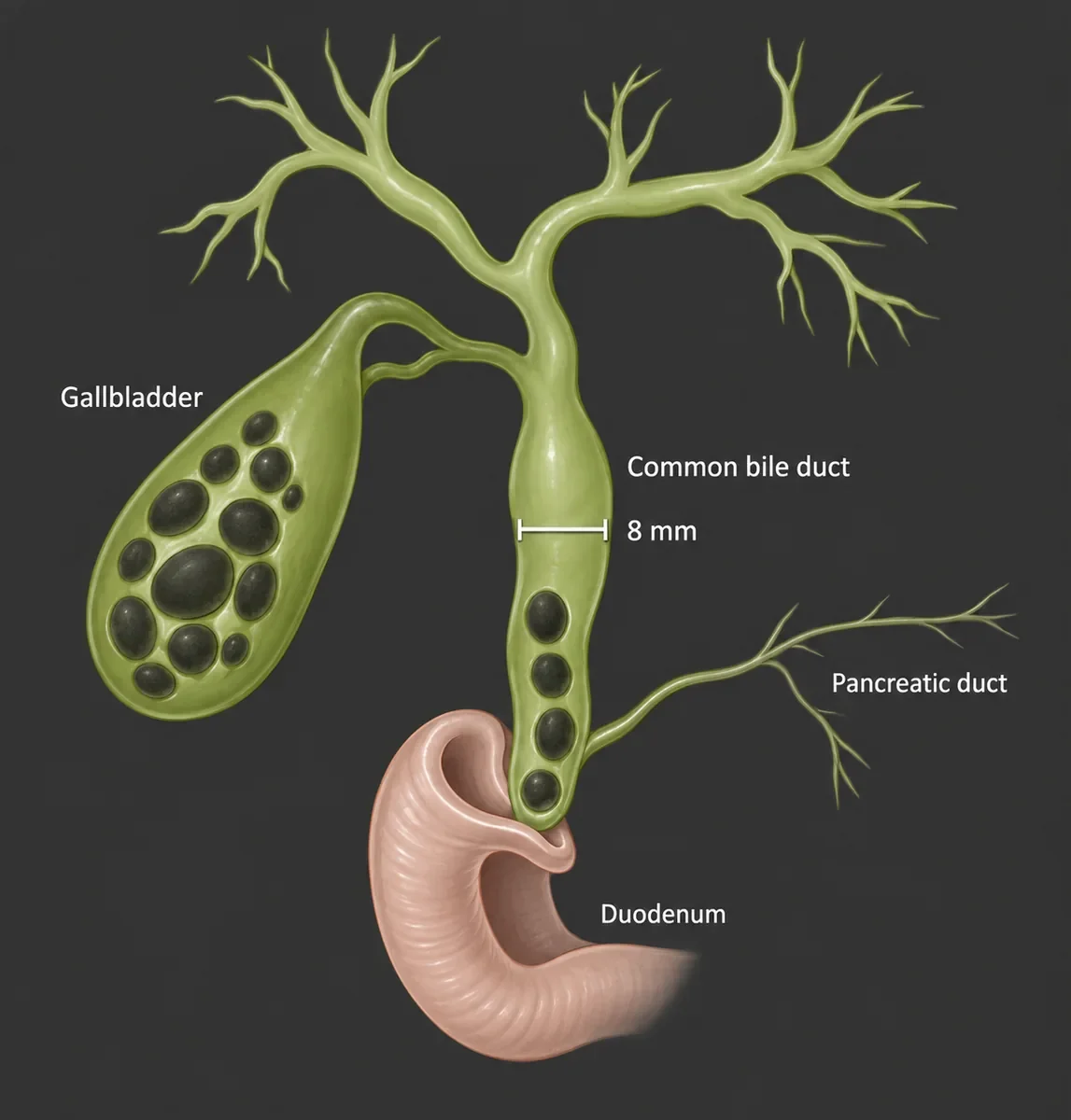
A fit 38-year-old woman has had two attacks of biliary colic and one episode of jaundice that settled. Her magnetic resonance cholangiopancreatogram is drawn in the figure. What is the best treatment?
 View larger ↗⤢ Tap to enlarge
- AEndoscopic duct clearance alone
- BLaparoscopic cholecystectomy alone
- COral ursodeoxycholic acid
- DDuct clearance plus cholecystectomy
Show the answer and explanation
Answer: D. Duct clearance plus cholecystectomy
The picture gives the diagnosis; the question asks for the plan. The gallbladder is full of stones, and the common bile duct is widened with four more stones in its lower third. Stones in both places need both dealt with: clear the duct—by endoscopic sphincterotomy before surgery or exploration during it—then remove the gallbladder in the same admission.
Why the closest rival loses: cholecystectomy alone (B) treats the gallbladder and leaves four stones in a widened duct to obstruct later. Duct clearance alone (A) suits a frail patient, not a fit 38-year-old whose gallbladder will keep making stones. Ursodeoxycholic acid (C) is slow, works only for small cholesterol stones and cannot clear a blocked duct.
Recallab question 55961 · Surgery › Gall bladder and bile ducts · reference: Bailey & Love's Short Practice of Surgery
3. The integrated question: follow the link between subjects
An integrated question may begin with a clinical presentation and ask about anatomy, physiology, pathology or a drug mechanism. The relevant knowledge sits across more than one subject heading.
A useful practice chain is: presentation → underlying process → consequence → requested answer. It need not be long. The aim is to make the connection explicit.
During preparation: when reviewing a topic, ask how it could be tested from another angle. Could the same concept appear as an image, a mechanism, a complication or a treatment decision?
In the exam: identify how far along that chain the question asks you to go. You may recognise the diagnosis correctly but still need one more reasoning step.
4. The image question: describe before you label
“Have I seen this exact picture?” is a fragile strategy. A different crop, orientation or example can make a familiar condition look unfamiliar.
First describe what is visible: the modality or specimen, location, pattern and relationships. Then connect those observations to the stem. Finally, answer the actual task: identification, diagnosis, mechanism or management.
During preparation: practise with unlabelled images and more than one example of the same concept. Cover captions, point to the feature you are using, and explain why it matters. Zooming can help inspect a detail during study; do not assume the exam interface will provide the same controls.
In the exam: check image labels, laterality, scale or axes where present. A correct identification of the picture can still lead to the wrong response if the question asks about its consequence.
Recallab example 3 · image plus explanation
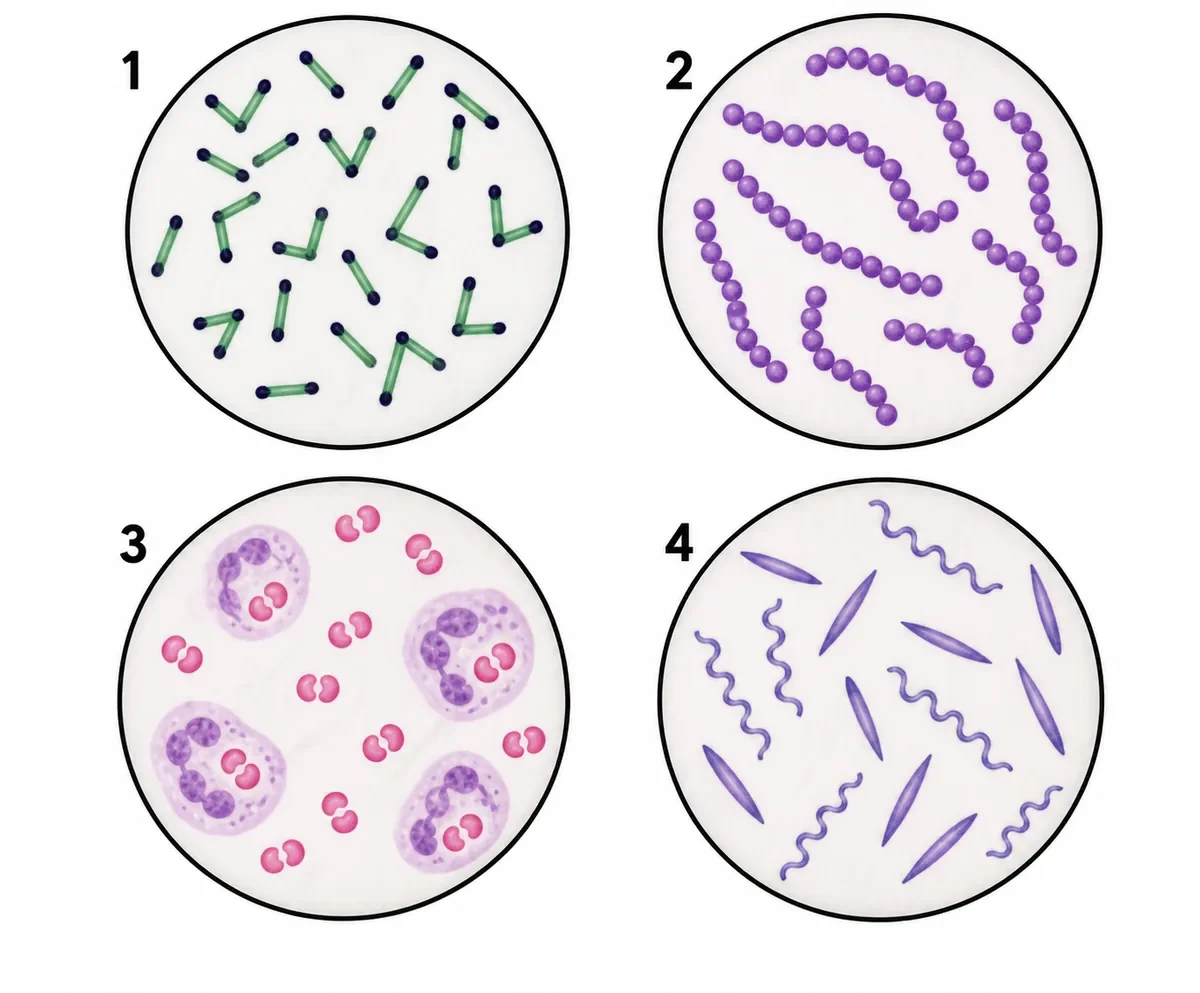
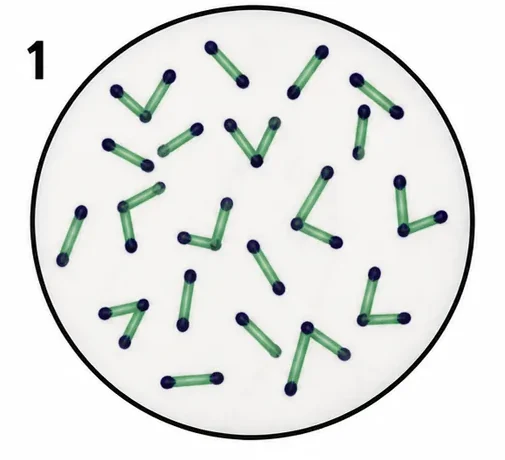
Throat swab smears from children with sore throats are drawn in the figure, panel 1 from a child with a greyish adherent membrane stained to show bacterial granules. What does panel 1 show?
 View larger ↗⤢ Tap to enlarge
- ACorynebacterium diphtheriae with metachromatic granules
- BFusospirochaetal flora of Vincent angina
- CCorynebacterium diphtheriae with terminal endospores
- DStreptococcus pyogenes in chains
Show the answer and explanation
Answer: A. Corynebacterium diphtheriae with metachromatic granules
 View larger ↗⤢ Tap to enlarge
Describe first: green rods, bluish-black dots at their ends, lying at angles like Chinese letters. That is the Albert stain picture of Corynebacterium diphtheriae. The dots are volutin (Babes–Ernst) granules, metachromatic because they take a different colour from the dye; the angled arrangement comes from snapping division.
Why the closest rival loses: option C names the right organism but misreads the dots—corynebacteria do not form spores. Panel 4 is the fusospirochaetal flora of Vincent angina (B) and panel 2 is streptococci in chains (D). A smear supports the diagnosis; toxigenicity is confirmed separately by the Elek test.
Recallab question 55224 · Microbiology › Bacteriology · reference: Ananthanarayan and Paniker's Textbook of Microbiology
5. The mechanism question: explain why the finding occurs
These questions ask for a causal link. A familiar association may appear among the options, but an associated finding is not necessarily the mechanism being tested.
During preparation: write a short “because” sentence after the answer. Then test whether you can explain why the competing mechanism would produce a different result.
In the exam: distinguish cause, consequence and association. Choose the option that answers the requested level of explanation.
6. The direct factual question: protect your foundations
A shift towards clinical framing does not make factual knowledge expendable. Definitions, structures, organisms and classifications can appear directly or become the missing link in a longer case.
During preparation: use brief retrieval prompts for facts you repeatedly forget, alongside deeper clinical practice. If you confuse two items, compare them directly rather than adding each to a separate page of notes.
In the exam: answer a clear factual question efficiently. A short stem does not need an elaborate hidden story.
7. The numerical or data question: define the quantity first
With a calculation, table or graph, the first task is deciding what is being measured. Substituting numbers into the wrong formula can produce a convincing answer.
During preparation: practise choosing denominators, converting units and interpreting results in words. Learn what each quantity means, not only its formula.
In the exam: state the requested quantity to yourself, select the relevant data, calculate using permitted facilities, then check whether the scale and units make sense. For graphs, read both axes before drawing a conclusion.
Recallab example 4 · data interpretation
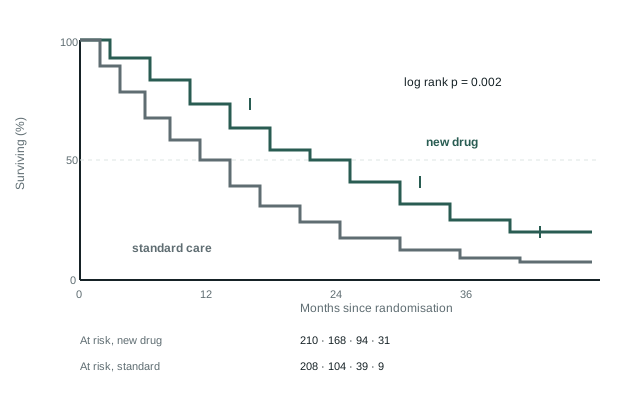
A trial reports the curves in the figure. Which statement does the figure actually support?
 View larger ↗⤢ Tap to enlarge
- ATick marks on the upper curve are deaths
- BAll standard care patients died by 36 months
- CEvery patient gains about 12 months
- DMedian survival about 24 versus 12 months
Show the answer and explanation
Answer: D. Median survival about 24 versus 12 months
Read the axes before the curves. Draw across at 50 per cent surviving and drop to the time axis: the new drug crosses at about 24 months and standard care at about 12. That is median survival, a summary of the group.
Why the tempting options lose: the tick marks on the upper curve are censored patients, still alive when last seen; deaths are the steps (A). The standard care curve is still above zero at 36 months, with nine patients at risk (B). A difference in medians does not mean every patient gains 12 months: some gain far more and some nothing (C). The numbers at risk show how thin the right-hand tail is.
Recallab question 54729 · Social and Preventive Medicine › Biostatistics · reference: Park's Textbook of Preventive and Social Medicine
The options are part of the question
Sometimes the stem is straightforward and the difficulty lies in choosing between four reasonable-looking responses. Practise asking what separates them.
| What you notice | A useful check |
|---|---|
| Two diagnoses fit several findings | Which detail best distinguishes them? |
| Several treatments could be used | Which fits this patient and this stage of care? |
| Two tests sound appropriate | Is the question asking for screening, initial investigation or confirmation? |
| Several statements are true | Which one answers the precise question? |
| The stem contains NOT, EXCEPT or least likely | Am I selecting the exception, rather than a familiar true statement? |
Elimination should have a reason. “This option sounds unusual” is weaker than “this option conflicts with the time course.” Conversely, do not invent missing findings to rescue a favourite answer.
Turn a completed question into preparation for the next one
After a useful MCQ, take three further steps:
- Explain the decision. State the decisive clue and why the nearest competing option is less appropriate.
- Change one relevant feature. Ask whether a different time course, clinical state or investigation result would change the answer. Check the reasoning against the explanation or an appropriate reference.
- Retrieve the idea later. Close the explanation and return to the concept after a delay, ideally with a different question.
This approach has a basis in learning research. In four experiments, repeated testing improved retention and performance on new inferential questions compared with repeated study. The research supports practising retrieval beyond memorising an answer; it does not guarantee transfer to every NEET PG question. Butler, 2010, Journal of Experimental Psychology
A randomised study in medical students also found benefits from spaced, question-based education for retention of clinical knowledge. A manageable recurring session is therefore a sensible way to organise revision, although no single daily question quota suits everyone. Kerfoot and colleagues, 2007, Medical Education
In Recallab, bring that habit to your question review. For a difficult MentorQ, a useful follow-up is: “What detail distinguishes my answer from the correct one?” Another is: “What would have to change for my answer to become appropriate?” Use the response to clarify the reasoning, then try recalling it without help. Explore MentorQs.
Make your revision respond to the kind of error
A score tells you how many answers were correct. An error log can tell you what to practise next.
| Why the answer went wrong | What to do next |
|---|---|
| I did not know the fact | Repair the knowledge gap and revisit it later. |
| I knew the facts but could not connect them | Explain the mechanism or decision sequence aloud. |
| I missed a visual feature | Revisit unlabelled examples and describe what you see. |
| I answered a different question | Practise identifying the task and its qualifiers. |
| I ran out of time | Use timed mixed blocks and review where time was lost. |
| I was right through uncertain guessing | Review the reasoning before treating the concept as secure. |
For a routine that works through a wrong answer step by step, with three worked questions, see how to review a wrong answer.
An occasional correct guess is not evidence of mastery. Equally, a wrong answer need not be wasted: identify what would prevent the same error next time. Include uncertain correct answers in your review, not only red marks.
On exam day: a routine you have already rehearsed
Before the exam, check the bulletin and instructions for your sitting through the official NBEMS NEET PG portal. Confirm the question count, timing, marking and navigation rules. Build your final timed mocks around those rules; do not rely on a remembered format from an earlier year.
At each question, identify the task, read the complete stem, pick out the decisive information and compare the options. Use a familiar routine rather than repeatedly rereading without a purpose.
When stuck, make your best assessment within your rehearsed time budget. If the interface permits review, return within the available section time. Where sections lock, a promise to “come back at the end” may be impossible. Practise that constraint in advance.
Before changing an answer, name the new evidence: a missed negative, a corrected calculation or a better interpretation. Change it when the reasoning improves; neither “always trust your first instinct” nor “never leave an uncertain answer alone” is a useful absolute rule.
For uncertain responses, apply an attempt strategy you have tested in mocks under the current marking scheme. Distinguish genuine elimination from pure guessing. There is no universal attempt count that suits every candidate.
The next question may present a familiar concept in unfamiliar wording. Prepare to recognise the relationship, interpret the evidence and answer the task in front of you. In your next practice session, choose one question and go beyond its answer: explain why it is right, why its closest rival is wrong, and what change would make you decide differently.
Why candidates use Recallab
- Built towards 22,000 — a batch at a time
- Illustrations drawn for the question
- Every option explained, not just the right one
- AI study tools that are live today
- Start free, today
Or see the plans, or try a timed mock section.
Register to practise NEET PG image MCQsFree account, no card needed. Practise with every option explained and a reference on every question.Drawn from questions #55320, #55961, #55224, #54729 in the Recallab bank, each with its own verified answer and current-edition reference. Last reviewed 22 September 2026.